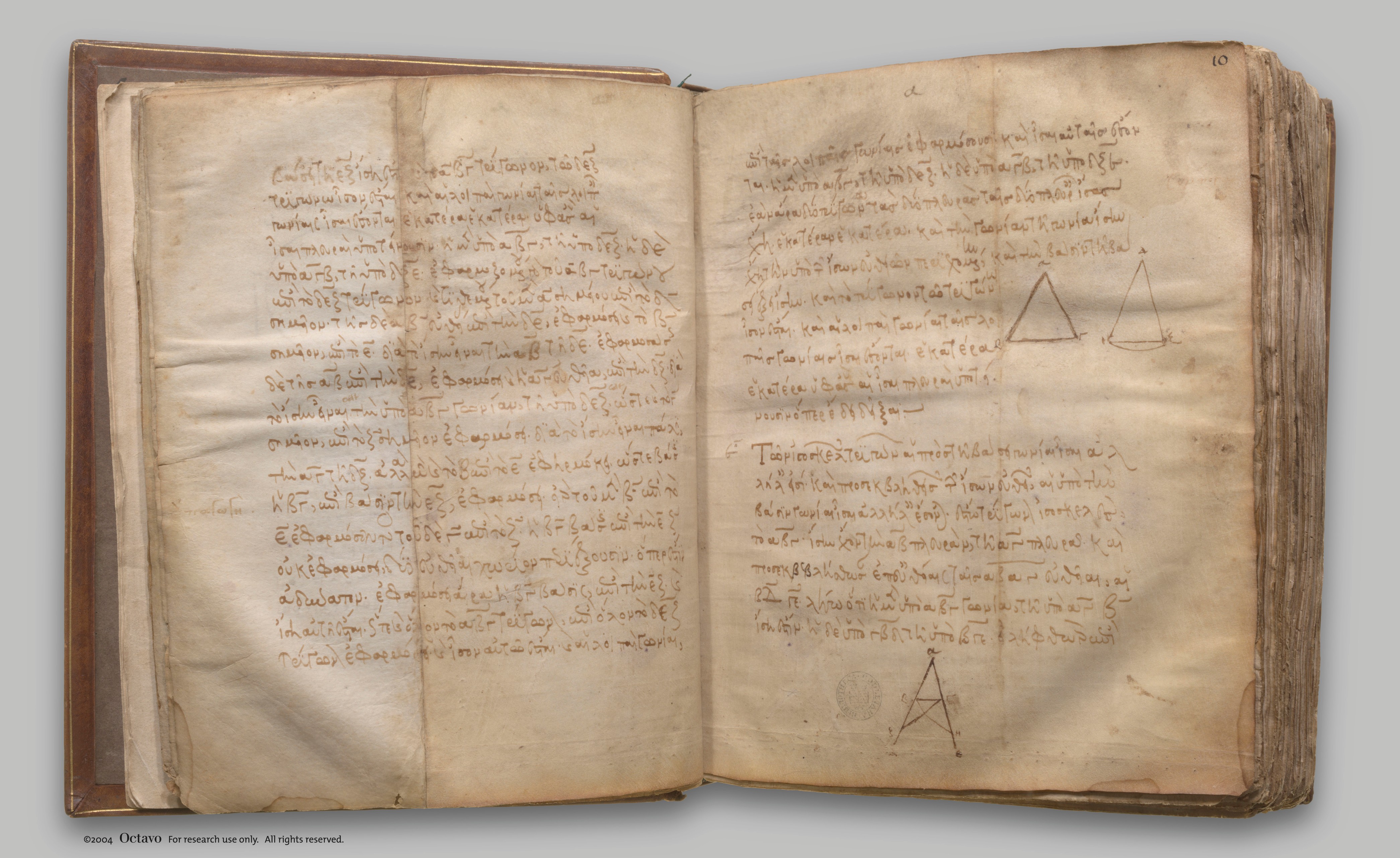
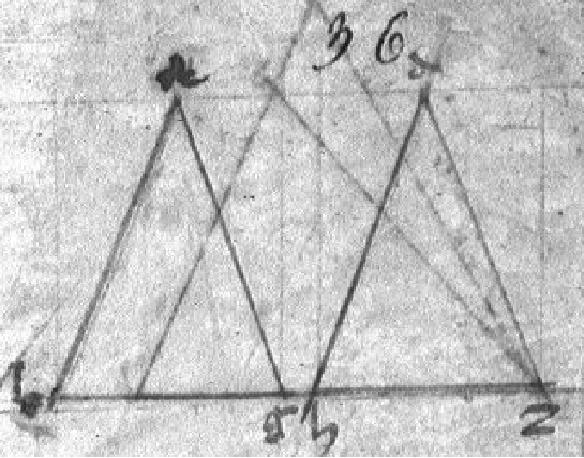
[For if, when B coincides with E and C with F, the base BC does not coincide with the base EF, two straight lines will enclose a space: which is impossible.
Quia cum punctum B positum fuerit super punctum E et punctum G super punctum Z impossibile erit quin basis BG cadat super basim EZ, due enim recte linee superficiem non concludunt quia hoc impossibile est.
Superposito enim puncto B puncto H punctoque G puncto Z, necessario basis BG super basim HZ cadet. Alioquin due recte linee planum continent, quod est impossibile.
1. The scholiast interpolation bracketed by Heiberg (on the basis of the Nayrīzī text), i.e. ”[εἰ γὰρ τοῦ μὲν Β ... ἐφαρμόσει ἄρα ἡ ΒΓ βάσις ἐπὶ τὴν ΕΖ]”, is not found in the Arabic version (at least not in the Uppsala MS). See Heath I, 249. But compare Gerard's text.
alias si supra caderet, aut infra, vt efficeretur recta E G F, vel E H F, clauderent duæ rectæ E F, E G F; vel E F, E H F, superficiem, (negare enim nemo poterit, tam E G F, quàm E H F, rectam esse, cum vtraque ponatur esse eadem, quæ recta B C.) quod est absurdum. Duæ enim rectæ superficiem 1
claudere non possunt.

 Title
Title
 Book I