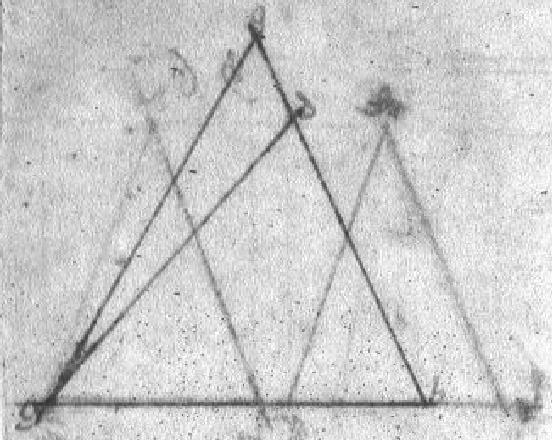
lat HermannNemo vero non videt id ita impossibile esse.
1. I.e. khalf (al-Khwārizmī, Mafātīḥ: al-khalf bi-fatḥ al-khā’ huwa l-radī’), ”contradiction, absurdity”, a technical translation of Greek ἄτοπος (earlier Arabic translations have shanī‘ and qabīḥ for the literal sense ”strange, awkward”, presumably an influence from later Greek Christian terminology, i.e. ἄτοπος in the sense ”wicked“). The term is often read khulf, but both al-Kwārizmī and Ibn Sīnā (who identifies this latter reading only with the legal term khulf al-wa‘d, ”breaking a promise”) explicitly favor khalf (Lameer 1994: 74). To this could be added the evidence from the ”Adelard II” translation (Robert of Chester?), where we find the term transcribed elkalf (Busard and Folkerts 1992: I.27). It’s not clear when (and how) this term came to be used in the sense ”absurd”; Zimmermann (1981: 198, note 6) suggests the meaning ”preposterous”, and khalf is attested in the Arabic lexica in the sense ”a false/wrong (or bad) saying” (cf. Lane). Lameer finds no evidence in the Syriac sources.
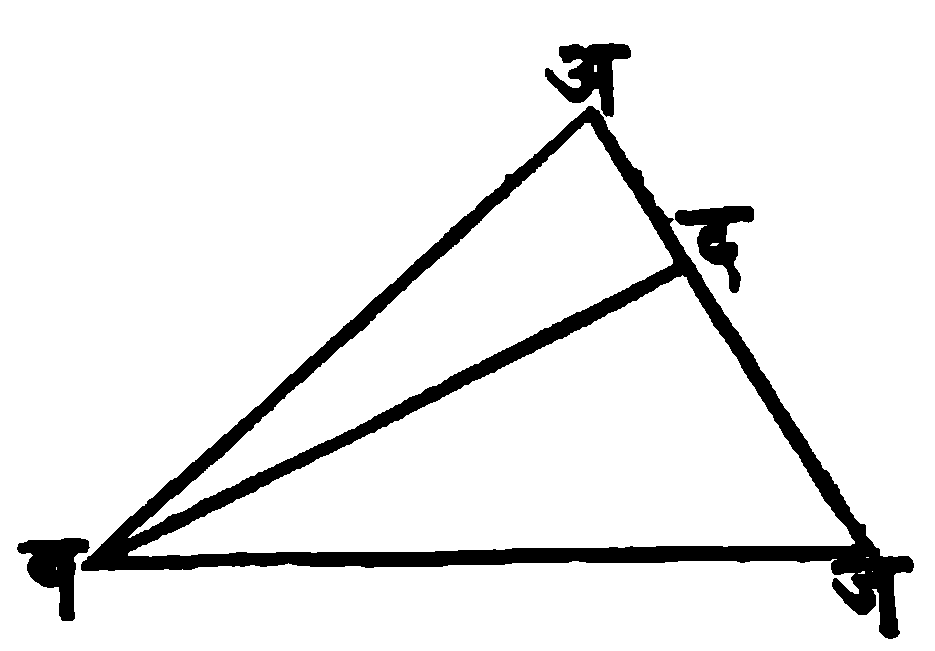
san 13, 11tad idam anupapannam | bṛhatkṣetraṃ laghukṣetreṇa kathaṃ samānaṃ bhavi(12)ṣyati
http://www2.hf.uio.no/common/apps/permlink/permlink.php?app=polyglotta&context=record&uid=24d3bcd4-261e-11e0-8f33-001cc4df1abe

 Title
Title
 Book I