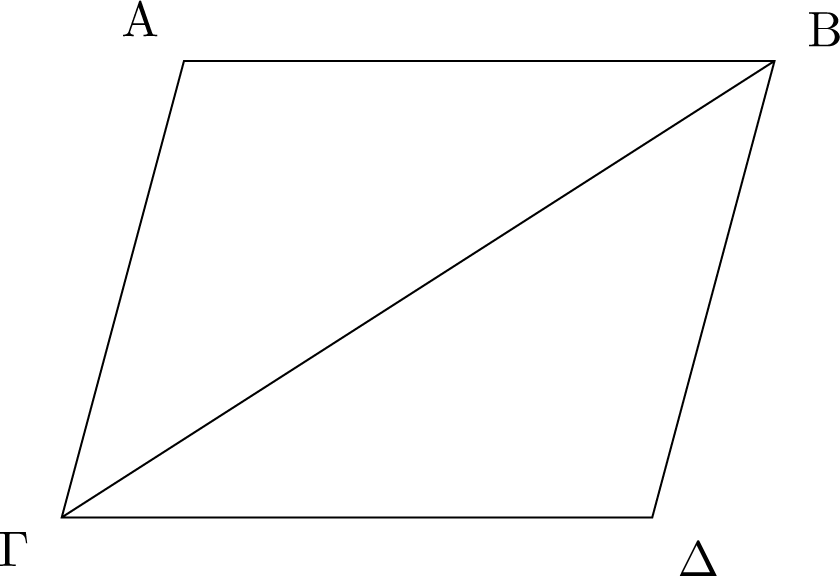
gre I,34πάλιν, ἐπεὶ παράλληλός ἐστιν ἡ ΑΓ τῇ ΒΔ, καὶ εἰς αὐτὰς ἐμπέπτωκεν ἡ ΒΓ, αἱ ἐναλλὰξ γωνίαι αἱ ὑπὸ ΑΓΒ, ΓΒΔ ἴσαι ἀλλήλαις εἰσίν.
engAgain, since AC is parallel to BD, and BChas fallen upon them, the alternate angles ACB, CBD are equal to one another. [I. 29]
lat SicRursum quoniam equidistans est recta AG rcete BD et in ipsas incidit recta BG, anguli permutatim AGB et GBD sibi invicem sunt equales.
lat GerardEt etiam quia linea AB linee GD equidistans existit et iam cecidit super eas linea recta DB, erunt duo anguli GDB; DBA coalterni equales.
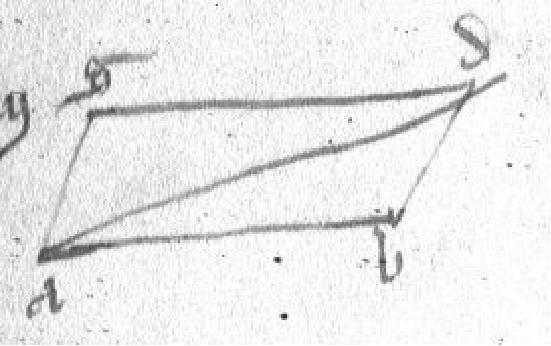
lat AdelardItemque quia AD supervenit duabus lineis equidistantibus AG et BD, facti sunt duo anguli coalterni, qui sunt GAD et ABD, equa1es.
ara Nairizi p. 146وايضا فقد اخرج على خطى (ا ج) (ب د) المتوازيين خط (ا د) فببرهان (كط) من (ا) فان زاويتى (ج ا د) (ا د ب) المتبادلتين متساويتان
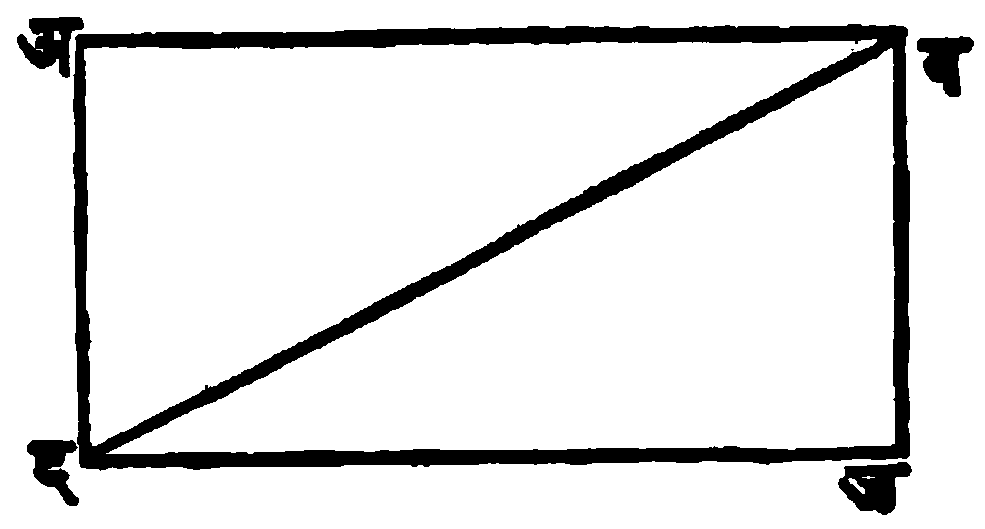
1. the Sanskrit version has exhnged the angles treated in this and the previous record when comparing it with the Greek and other versions. The sentences still somewhat equivalent, since it also the lettering has been changed – in the figures the da corresponds to the Γ, and the ja corresponds to Δ.
lat ClaviusRursus quia A D, B C, sunt parallelæ, erunt & anguli alterni B C A, D A C, æquales.
http://www2.hf.uio.no/common/apps/permlink/permlink.php?app=polyglotta&context=record&uid=25c9bfda-261e-11e0-8f33-001cc4df1abe

 Title
Title
 Book I