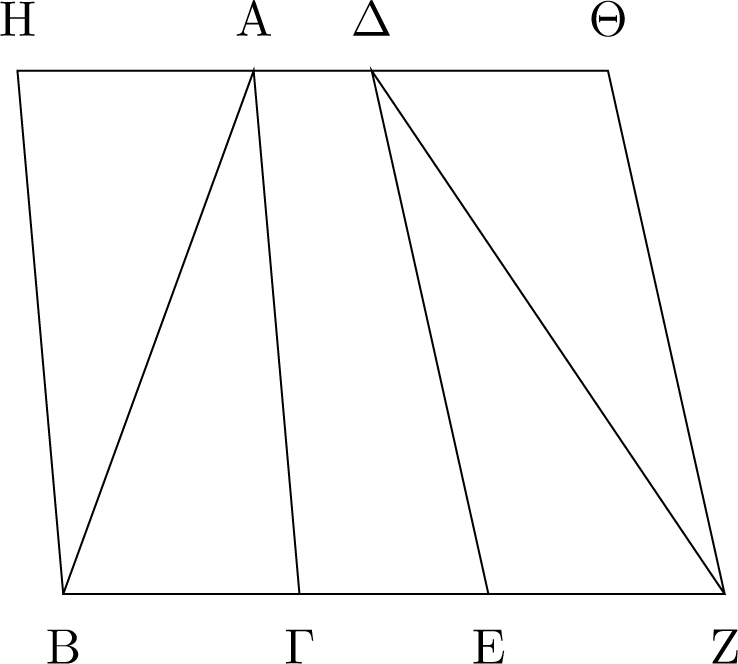
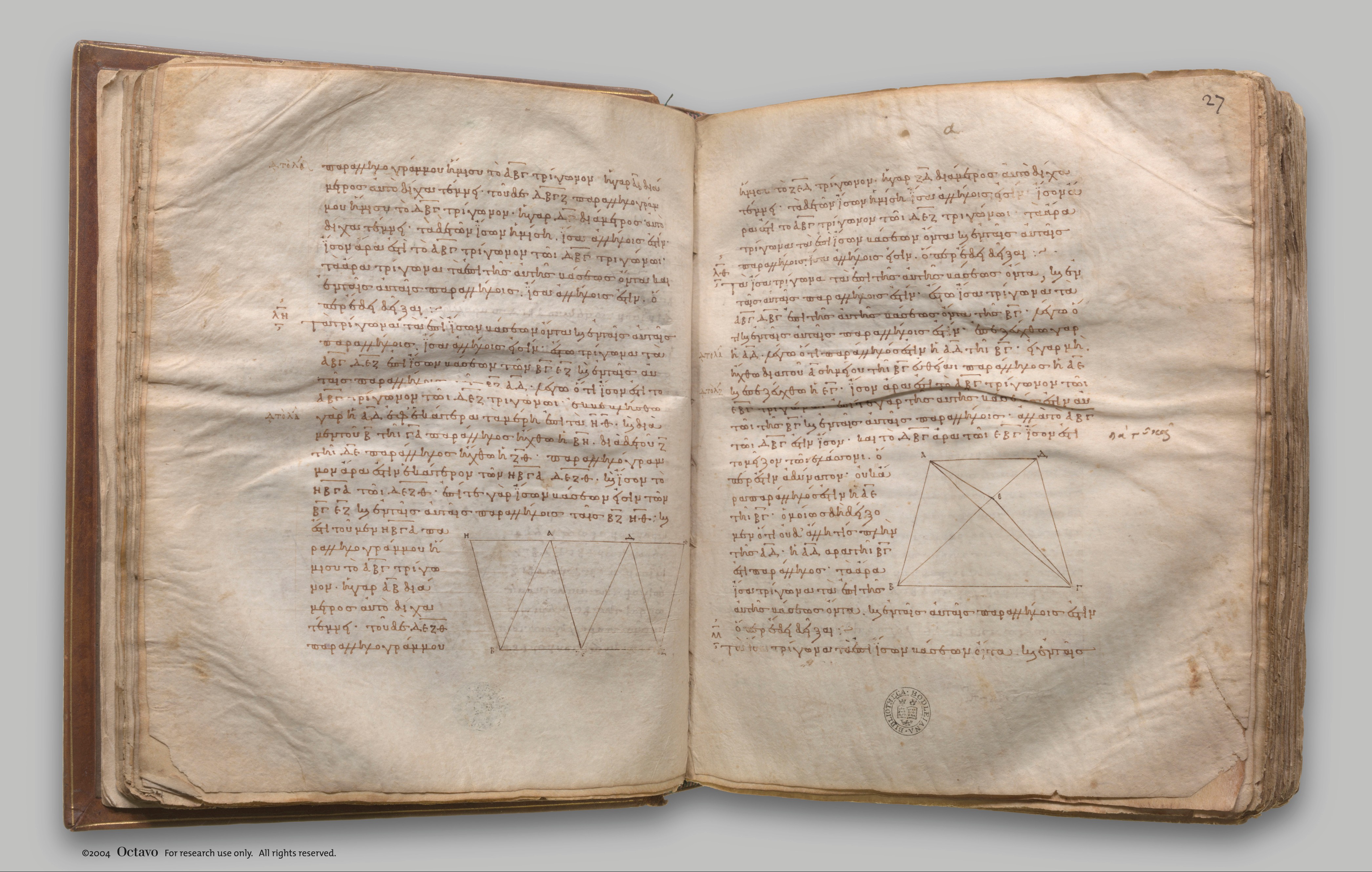
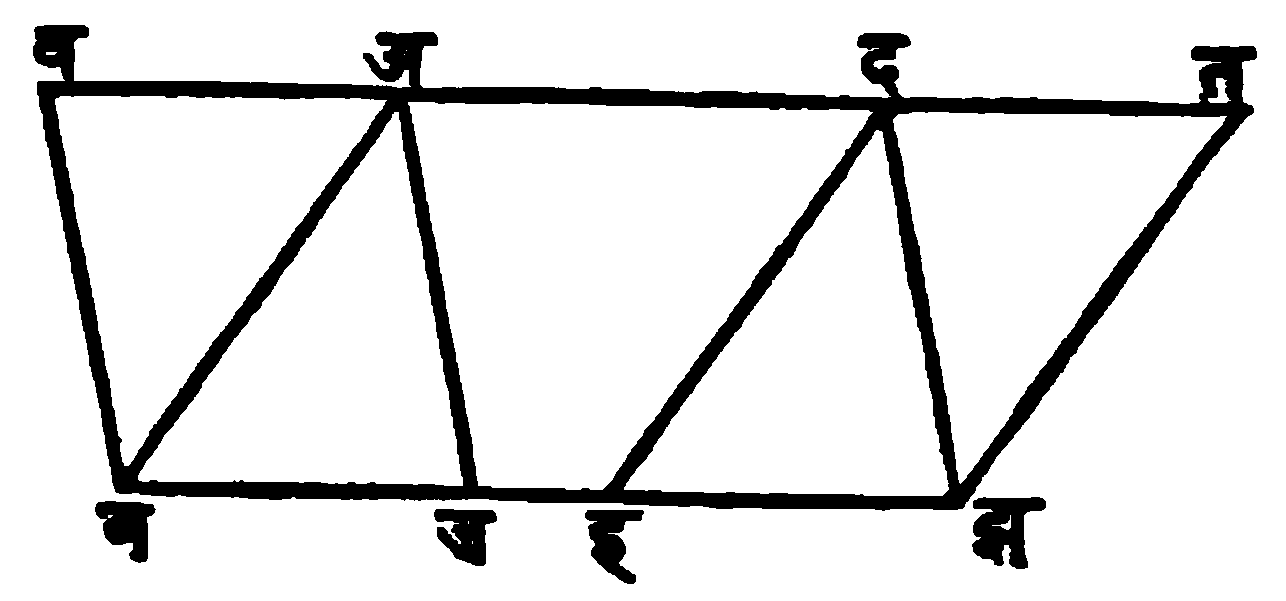
gre I,38καὶ διὰ μὲν τοῦ Β τῇ ΓΑ παράλληλος ἤχθω ἡ ΒΗ, διὰ δὲ τοῦ Ζ τῇ ΔΕ παράλληλος ἤχθω ἡ ΖΘ.
engthrough B let BG be drawn parallel to CA, [I. 31] and through F let FH be drawn parallel to DE.
lat SicEt per punctum quidem B recte GA equidistans ducatur recta BI, per Z vero recte DE equidistans ducatur recta ZT.
lat Gerarddeinde producam a puncto B lineam rectam linee recte AG equidistantem sitque BH, et a puncto Z lineam rectam equidistantem linee recte ED sitque linea ZT.
lat AdelardIungaturque B cum Z linea equidistante linee AG. Iungatur quoque H cum H linea equidistante linee DG.
ara Tuṣi p. 25ولنزرج (ب ح) موازيا لـ(ج ا) و(ز ط) موازيا لـ(ه د) الى ان يلتقيا (ا د) الخرج من جهتيه على (ح ط) [لا]
1
1. The Greek Vorlage for the end of this sentence is in the previous record
ara Nairizi p. 154ونخرج من نقطة (ب) خطا موازيا لخط (ا ج) يلتى الخط المخرج على نقطة (ز) ونخرج ايضا من نقطة (ه) خطا موازيا لخط (ج د) يلقى الخط المخرج على نقطة (ح) كما بين اخراج ذلك ببرهان (لا) من (ا)
san 56,5-8bacihnāt
jaarekhāyāḥ samānāntarā
bavarekhā kāryā |
jhacihnāt
hadarekhāyāḥ samānāntarā
jhatarekhā kāryā |
adarekhā digdvaye varddhitā tathā kāryā yathā
vatacihnayoḥ saṃpātaṃ karoti |
1
1. The last sentence corresponds to the Greek in the previous record, q.v.
lat ClaviusDucatur enim E G, parallela ipsi A C, & D H, ipsi B F.
http://www2.hf.uio.no/common/apps/permlink/permlink.php?app=polyglotta&context=record&uid=25ee06ce-261e-11e0-8f33-001cc4df1abe

 Title
Title
 Book I