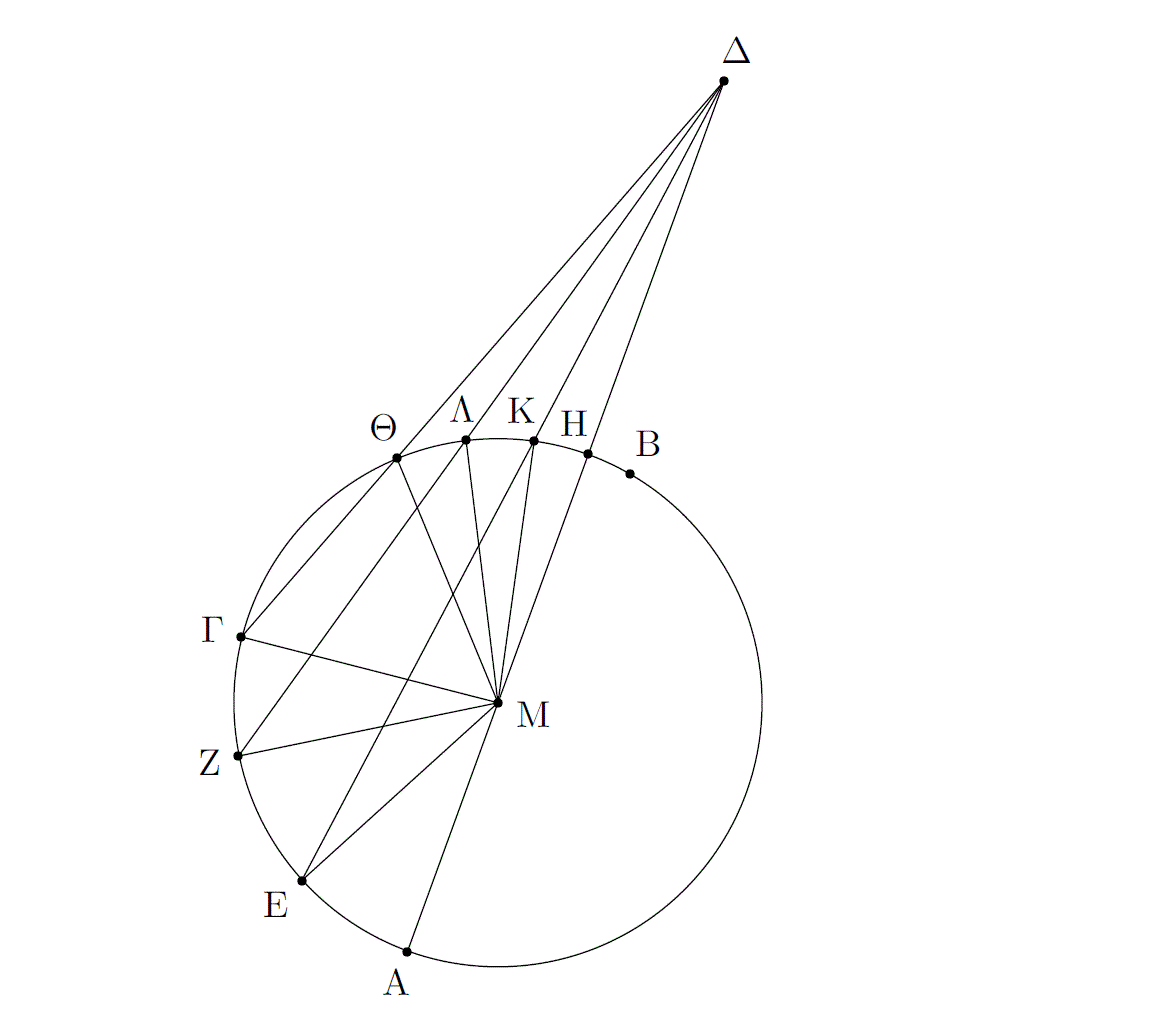
gre ΙΙI,8Καὶ ἐπεὶ αἱ ΜΚ, ΚΔ τῆς ΜΔ μείζονές εἰσιν,
engNext, since MK, KD are greater than MD, [I. 20]
lat SicEt quoniam recte MK, KD recta MD maiores sunt,
lat GerardEt hoc est etiam quia linea MK et linea KG coniuncte sunt longius linea MG.
lat Hermann 20rNam brevissimam H cum diametro continuat. Est itaque TMG triangulus triangulo LGM quem in se continet maior. Eodemque modo is ilIo quem in se comprehendit maior. lam vero MK et KG duo latera reliquo longiora sunt, parique ratione eadem GM linea MN et NG lateribus brevior erit.
1
1. Hermann shortens the argument in the way of excluding all the arguments connected with the lower par of the circle. He also shortens and rearranges the argument for the upper part. In the present record only the sentence “lam vero MK et KG duo latera reliquo longiora sunt” corresponds to the Greek, while the argument, in the beginning of this reord, on the length of sides of triangles contained in bigger triangles comes later in the Greek text, see below. Further, Hermann here, at the end of the sentence involving the point N, also refers to the argument later in the proposition that only two lines touching the periphery have the same length, se further below.
http://www2.hf.uio.no/common/apps/permlink/permlink.php?app=polyglotta&context=record&uid=6993cd6c-3ed4-11e1-aecb-00215aecadea

 Title
Title
 Book I